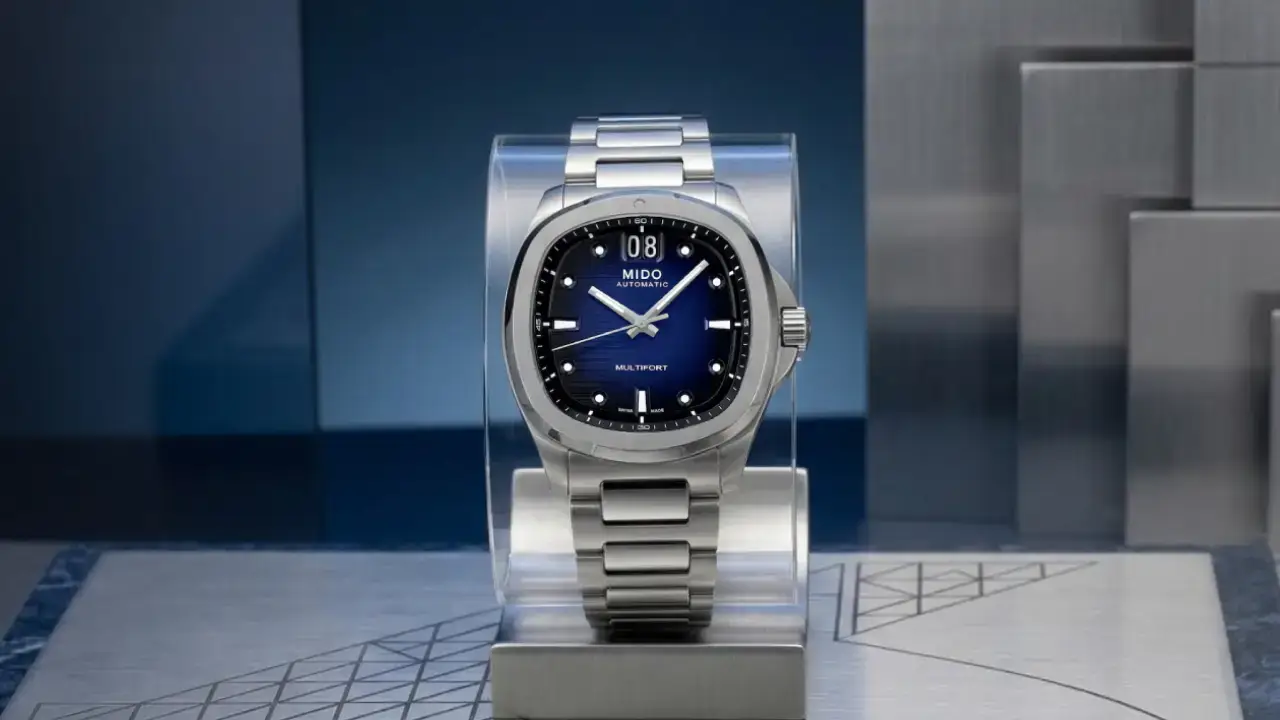
In the entry-level Swiss mechanical watch segment, the Tissot PRX and the MIDO Multifort are two of the most frequently compared models. They sit in a similar price range, belong to the Swatch Group ecosystem, and both use reliable automatic movements. This is exactly why many first-time buyers struggle to choose between them. But in reality, they represent two very different philosophies of watch design.
Why Are PRX and MIDO Multifort Always Compared?
The comparison exists for one simple reason: They both define the modern “entry-level Swiss sports watch” category. •PRX represents design-driven appeal •Multifort represents mechanical expression
What Is the PRX?
The PRX became popular thanks to its strong design identity. It follows the integrated bracelet sports watch style inspired by 1970s design language. Its key characteristics include: •Integrated case and bracelet design •Clean, geometric silhouette •Strong visual impact at first glance •High social media appeal In short, the PRX is designed to look premium immediately. It is powered by the Powermatic 80 movement, offering around 80 hours of power reserve, which is excellent in this price category.
However, its main strength is not mechanical complexity, but design execution.
What Is the MIDO Multifort? (FOCUS)
The MIDO Multifort is a more mechanically expressive and structure-focused collection. Its roots date back to 1934, making it one of MIDO’s most historically significant lines. Unlike the PRX, the Multifort is defined by: structure, depth, and industrial design language.
Key design traits include: •More layered and textured dials •Strong industrial aesthetic •Visible mechanical depth •Tool-watch-inspired character It also uses the Caliber 80 automatic movement system, offering up to 80 hours of power reserve, with some models featuring chronometer certification. If the PRX is a refined design object, the Multifort feels more like a mechanical instrument brought to life.
Design Comparison: Minimalism vs Mechanical Depth
This is the core difference between the two watches.
PRX: Minimal and unified design
•Seamless integrated look •Clean and modern aesthetic •Strong visual identity •Feels like a lifestyle accessory
Multifort: Mechanical and layered design
•More complex dial structure •Industrial design elements •Strong sense of depth •Feels like a technical instrument In simple terms: •PRX is about overall design harmony •Multifort is about mechanical detail expression
Movement and Performance
Both watches are closely related technically, as they come from the Swatch Group ecosystem. Shared features: •Automatic movement •~80-hour power reserve •Reliable Swiss mass-production engineering platform The difference is not performance, but philosophy: •PRX focuses on smooth, minimal execution •Multifort emphasizes robustness and mechanical presence
Wearing Experience
The wearing experience highlights another clear distinction.
PRX
•Slim, integrated wrist feel •Strong fashion-oriented presence •Ideal for daily casual and social settings •Visual impact is the main appeal
Multifort
•More tool-watch wrist presence •Richer visual complexity •More understated but longer-lasting appeal •Better suited for long-term daily wear If PRX is “instant attraction,” Multifort is “long-term appreciation.”
Value for Money
At around $800–$1,700, both watches offer strong value in the Swiss mechanical watch segment. •PRX delivers value through design popularity and trend appeal •Multifort delivers value through durability and long-term wear experience Neither model is an investment watch. Both are designed to be worn, not traded.
Who Should Buy the PRX?
You should consider the Tissot PRX if you: •Are buying your first mechanical watch •Prioritize design and aesthetics •Prefer popular, recognizable models •Want something that looks premium at first glance
Who Should Buy the MIDO Multifort?
You should consider the MIDO Multifort if you: •Have already explored popular entry-level models •Want to avoid wearing the same watch as everyone else •Value mechanical structure and dial depth •Prefer understated but detailed design •Care more about long-term wearing satisfaction
Final Verdict: PRX or MIDO Multifort?
The PRX and Multifort are not competing in terms of “which is better.” They represent two different directions in watchmaking: •PRX: design-driven mainstream success •Multifort: mechanical expression with depth and character If you want instant visual appeal, the PRX is the safer choice. If you value mechanical feel, depth, and long-term appreciation, the Multifort is more rewarding. Ultimately, the decision is not about which watch is better, but about what you want your watch to express.
FAQ
Is MIDO Multifort better than PRX? Not directly. They serve different purposes: Multifort focuses on mechanical depth, PRX focuses on design impact. Is the MIDO Multifort worth it? Yes, especially for buyers looking for a reliable Swiss automatic watch with strong long-term value. Which is more durable? Both are highly reliable, as they are built within the Swatch Group manufacturing system. Does the MIDO Multifort use an ETA movement? Yes, it is based on the ETA C07 (Caliber 80) movement platform.