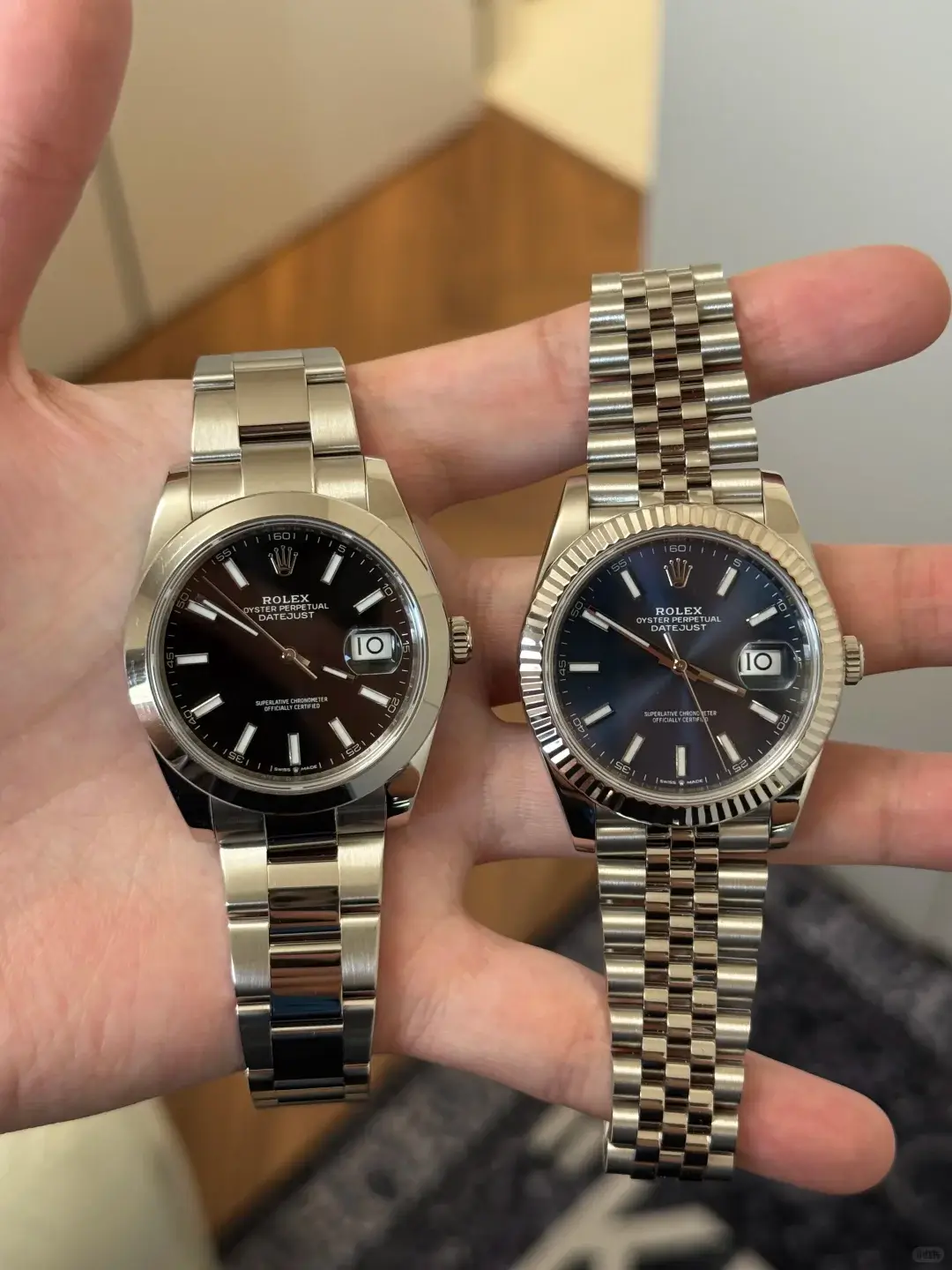
When choosing a Rolex Datejust or GMT-Master II, most buyers spend hours comparing the dial, bezel, case size, and movement. Then they reach one surprisingly difficult decision: should you choose an Oyster bracelet or a Jubilee bracelet? At first glance, the difference seems simple. Oyster has three links, while Jubilee has five. But once you wear the watch for several hours, the difference becomes much more noticeable.
The bracelet affects how the watch feels on your wrist, how formal it looks, how easily it shows scratches, and even how well it works with different outfits. This is why the Rolex Oyster vs Jubilee debate is not really about which bracelet is better. It is about which bracelet better matches the way you wear your watch. Oyster gives aRolex a cleaner, sportier, and more tool-watch character. Jubilee adds flexibility, visual detail, and a more refined appearance. Neither is universally superior.
The right choice depends on your watch, wrist, lifestyle, and personal taste.
What Is the Difference Between Rolex Oyster and Jubilee?
The biggest visual difference between these two Rolex bracelet types is the number and arrangement of links. The Oyster bracelet uses a three-link construction. Its broad center link and simpler structure give it a solid and understated appearance. The design works particularly well with Rolex sports watches because it emphasizes strength and functionality. The Jubilee bracelet uses five links across its width.
Its smaller links create a more intricate appearance and allow the bracelet to move more freely around the wrist. The result is generally more elegant and dressier. The two bracelets also have different historical identities. Rolex introduced the Oyster bracelet in 1931. It became one of the defining features of the brand and was closely associated with Rolex's emphasis on water resistance and durable sports watches. The Jubilee bracelet was introduced in 1945 for the Datejust.
Its more elaborate five-link design gave the new watch a more refined character. That difference in history still influences how people perceive the bracelets today. Oyster feels more functional. Jubilee feels more refined.
Rolex Oyster Bracelet: Strength and Simplicity
The Oyster bracelet is probably the easier choice if you prefer a clean and sporty appearance. Its three-link structure creates a broader visual surface. Instead of breaking the bracelet into many small sections, Oyster presents a more continuous appearance from the lugs to the clasp. This makes it particularly effective on watches with strong case designs. Think about a Submariner, Explorer, or Daytona. The Oyster bracelet reinforces the idea that the watch is designed for active use.
It also works well for people who prefer understated luxury. There is less visual detail competing with the dial and bezel. The watch tends to look cleaner and more contemporary.
Why Choose Oyster?
Oyster may be the better choice if you: •Prefer a sporty appearance •Want a simpler bracelet design •Wear your Rolex casually •Use your watch frequently •Prefer a stronger tool-watch character •Want the bracelet to attract less visual attention Oyster is not necessarily more comfortable for everyone, but its solid and straightforward construction can feel reassuring during everyday use. It is also easier to understand visually.
There are fewer individual links, so the bracelet has a simpler appearance and does not create as much visual complexity.
Rolex Jubilee Bracelet: Comfort and Elegance
The Rolex Jubilee bracelet takes the opposite approach. Its five-link construction creates a more detailed and sophisticated appearance. The smaller links can also allow the bracelet to articulate closely around the wrist. This flexibility is one reason many Rolex owners find Jubilee particularly comfortable for extended wear. Jubilee also changes the personality of the same watch. A Datejust on Oyster can look relatively sporty and understated.
Put the same case on Jubilee, and the watch immediately feels more formal and traditional. The difference becomes especially obvious with a fluted bezel. A fluted-bezel Datejust paired with Jubilee creates one of the most recognizable classic Rolex combinations. The bracelet adds another layer of visual detail without overpowering the watch.
Why Choose Jubilee?
Jubilee may be the better choice if you: •Prefer an elegant appearance •Want more visual detail •Wear your Rolex with business clothing •Like a more traditional Rolex aesthetic •Prioritize bracelet flexibility •Want your watch to stand out more However, Jubilee does have more individual links and tighter spaces between them. That means it can require more attention when cleaning the bracelet.
Modern Jubilee bracelets are also substantially more robust than the vintage bracelets that developed reputations for stretching over time. It is therefore important not to judge current Jubilee bracelets solely by the behavior of older examples.
Rolex Oyster vs Jubilee: 7 Key Differences
The easiest way to understand the difference is to compare the two bracelets based on the factors that actually matter when wearing a Rolex.
1. Design
Oyster uses three links and has a broader, simpler appearance. Jubilee uses five links and creates a more intricate pattern. If you prefer minimalism, Oyster is usually the natural choice. If you want more visual detail, Jubilee has the advantage.
2. Comfort
Comfort is highly personal, but Jubilee often feels more flexible because of its smaller links. The bracelet can articulate closely around the wrist, which some people prefer during long periods of wear. Oyster can still be extremely comfortable, especially when properly sized. The important point is that bracelet comfort cannot be determined by link count alone. Wrist shape, bracelet sizing, clasp adjustment, and personal preference all matter.
3. Durability
Oyster has a strong association with Rolex's sports watches and tool-watch heritage. Its simple three-link construction gives it a substantial appearance and makes it a natural match for watches designed for active use. Jubilee is also designed for everyday wear, especially in its modern forms. It should not be treated as a fragile dress bracelet. The difference is more about design philosophy than a simple "strong versus weak" comparison.
4. Scratches
Both bracelets can scratch. This is particularly important with modern Rolex bracelets that use a mixture of brushed and polished surfaces. Oyster can sometimes make scratches easier to identify because of its broad surfaces. Jubilee has more individual links, so small marks can be visually distributed across a more complex pattern. Neither bracelet is scratch-proof. If you wear your Rolex every day, some signs of use are inevitable.
5. Cleaning
Oyster has a relatively straightforward structure, which can make routine cleaning easier. Jubilee has more links and smaller spaces between them. Dust, skin oils, and other debris can therefore become more noticeable if the bracelet is not cleaned regularly. This does not make Jubilee impractical. It simply means that owners who want the bracelet to maintain its original appearance may need to pay more attention to cleaning.
6. Style
This is where the difference becomes most obvious. Oyster generally looks sportier and more understated. Jubilee generally looks more elegant and detailed. That is why the same Rolex case can feel completely different depending on which bracelet is fitted.
7. Everyday Versatility
Both bracelets can work for everyday wear. Oyster is particularly easy to pair with casual clothing. Jeans, sneakers, polo shirts, and outdoor clothing all work naturally with it. Jubilee can also be worn casually, but it has a stronger visual connection to business and formal clothing. If your wardrobe moves constantly between casual and formal settings, either can work. Your preferred aesthetic matters more than a strict dress-code rule.
Rolex Datejust: Oyster or Jubilee?
The Datejust is where the Rolex Oyster vs Jubilee decision becomes particularly interesting. The Datejust has historically been closely associated with the Jubilee bracelet, but Oyster is also available on many configurations. A Datejust with Jubilee emphasizes the watch's classic and elegant character. A Datejust with Oyster looks cleaner and somewhat sportier. If you wear a Datejust mainly with suits, dress shirts, or business clothing, Jubilee is a natural fit.
If you want a Datejust that works equally well with casual clothes, Oyster may be more appealing. Case size matters too. A larger Datejust can sometimes benefit visually from the simpler structure of Oyster, while Jubilee can add more visual complexity to the wrist. However, there is no universal wrist-size rule that determines which bracelet you should choose. Your wrist circumference is useful information, but it should be treated as one factor rather than a strict cutoff.
Rolex GMT-Master II: Oyster or Jubilee?
The GMT-Master II creates another interesting comparison. The modern GMT-Master II is available with different bracelet configurations depending on the reference and production period. The blue-and-black 126710BLNR is particularly well known for the two bracelet personalities associated with it. The Oyster configuration is commonly associated with the nickname "Batman." The Jubilee configuration is commonly called "Batgirl." The watch itself does not become a different model simply because the bracelet changes.
But its visual personality changes significantly. Oyster makes the GMT-Master II feel more like a traditional professional travel watch. Jubilee makes it feel more polished and luxurious. This is one reason the same GMT-Master II can appeal to very different buyers depending on the bracelet.
Which Rolex Bracelet Is Better for Smaller Wrists?
Wrist size can influence the visual balance between the watch and bracelet, but it should not be used as a strict formula. A smaller wrist may make the flexibility of Jubilee particularly appealing because the bracelet can follow the wrist more closely. Oyster, on the other hand, creates a broader and more substantial visual presence.
The best approach is to consider three things together: Wrist circumference + case size + personal style For example, a 36mm Datejust on Jubilee can create a very classic and refined appearance on a smaller wrist. A larger Rolex case on Oyster may create a stronger and more contemporary appearance. The goal is not to find a bracelet that is technically "correct" for your wrist. The goal is to find the combination that looks proportionate and feels comfortable.
Can You Change a Rolex Oyster Bracelet to Jubilee?
This is where buyers of pre-owned Rolex watches should be particularly careful. A bracelet is not simply a universal accessory that can be swapped between every Rolex model. The case reference, lug dimensions, end links, clasp system, bracelet reference, and overall fit all matter. A bracelet that physically appears close to fitting may not produce the correct factory appearance. For a pre-owned Rolex, the original bracelet configuration can also matter to collectors.
If a watch is advertised as a particular factory configuration, replacing the bracelet with another type does not necessarily mean the watch has the same collector appeal as a factory-original example. This is especially important when comparing prices. Do not automatically pay more simply because a watch has Jubilee. At the same time, do not automatically discount a Rolex simply because it has Oyster.
The bracelet should be evaluated together with the reference, production year, condition, originality, box and papers, and overall configuration.
Conclusion
The best choice between Rolex Oyster and Jubilee depends on your personal style, wearing habits, and the character you want from your watch. Neither bracelet is universally better. Oyster and Jubilee represent two different approaches to Rolex design, so the right choice ultimately comes down to which one feels more natural for you. When choosing a Rolex, look beyond the bracelet alone. Consider the watch as a whole and choose the configuration that you will enjoy wearing every day.