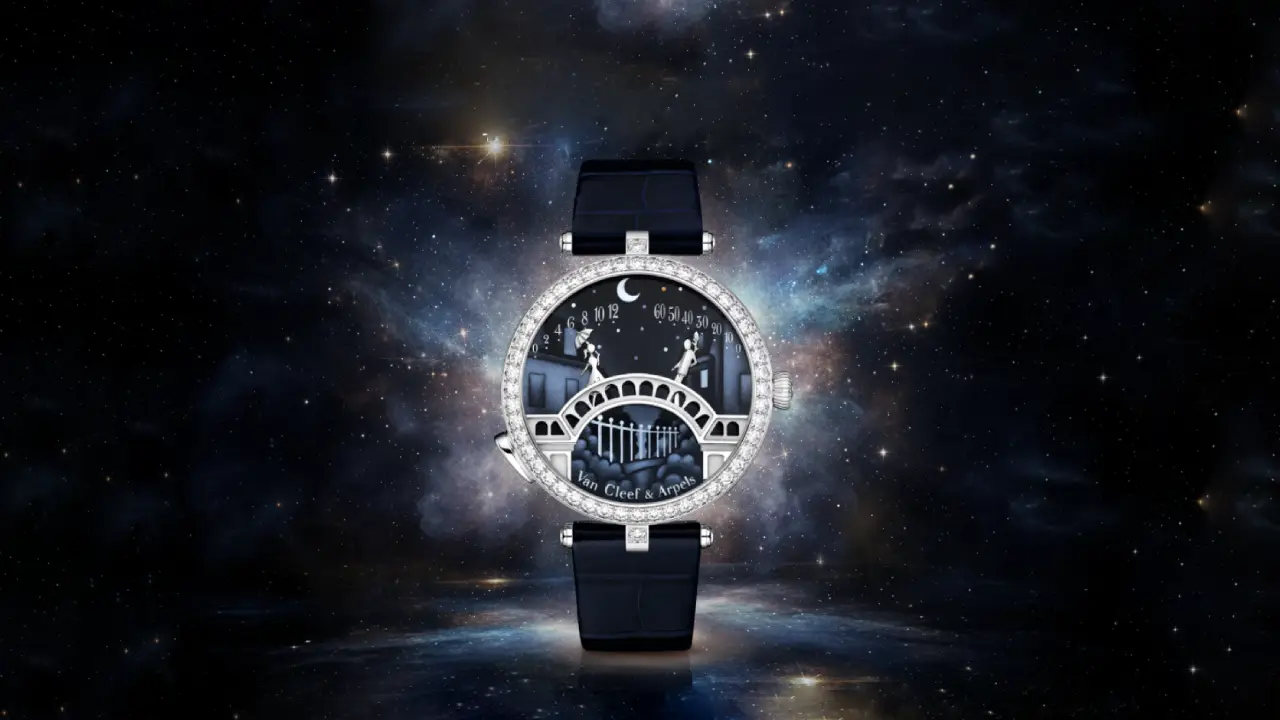
In the world of high-end mechanical watchmaking, few complications are as visually striking—and mechanically fascinating—as the retrograde display. While most watches rely on hands that rotate continuously around a dial, retrograde watches break this tradition in a way that feels both technical and artistic. For collectors and enthusiasts exploring complications beyond the basics, understanding retrograde watches is an essential step.
What Is a Retrograde Watch?
A retrograde watch is a timepiece in which a hand moves along a scale—usually an arc—instead of making a full 360-degree rotation. Once the hand reaches the end of that scale, it instantly snaps back to its starting point. This “jump back” motion is what defines the retrograde complication. Instead of continuous circular motion, the display operates in a linear or semi-circular progression followed by a reset.
Common retrograde applications include: •Date display •Day of the week •Power reserve indicator •Seconds (less common)
How Do Retrograde Watches Work?
At first glance, a retrograde display might look simple. In reality, it requires a carefully engineered mechanism that differs significantly from standard gear-driven hands. Inside a retrograde watch, the system typically relies on: •A cam that defines the path of the hand •A spring that stores energy as the hand moves forward •A release mechanism that triggers the instant return As the hand travels across the scale, the spring gradually builds tension.
Once it reaches the endpoint, the mechanism releases that stored energy, causing the hand to snap back instantly. This action must be precisely calibrated. Too little force, and the hand won’t reset properly. Too much, and it could damage the movement over time. That balance is one of the reasons retrograde complications are considered technically demanding.
Why Are Retrograde Watches Special?
Retrograde watches stand out for both their engineering and their aesthetics.
1. Mechanical Complexity
Unlike standard displays, retrograde mechanisms involve controlled energy release, making them more difficult to design and regulate.
2. Visual Impact
The sudden “snap-back” motion adds a dynamic element that traditional watches don’t offer.
3. Design Flexibility
Because retrograde scales are often curved or linear, watchmakers can create more creative dial layouts. Brands such as Vacheron Constantin and Breguet are particularly known for integrating retrograde displays into elegant and balanced designs.
Types of Retrograde Watches
Retrograde complications can appear in different forms depending on what function they display.
Retrograde Date
The most common type. The hand moves from 1 to 31 and jumps back at the end of the month.
Retrograde Day
Displays the day of the week in a similar arc format.
Retrograde Power Reserve
Shows remaining energy in the movement, often adding a functional touch to the complication.
Double Retrograde
A more advanced configuration featuring two retrograde displays—typically date and day—working simultaneously. This layout is often associated with high-end watchmaking, especially from brands like Patek Philippe.
How to Read a Retrograde Watch
Reading a retrograde display is simple once you understand the layout. Instead of looking for a hand completing a full circle, you follow it along a marked scale. The position of the hand indicates the current value—just like reading a gauge. When the hand reaches the end of the scale, it instantly returns to the beginning, marking a new cycle. For example: •A retrograde date hand pointing at “28” indicates the 28th day •At the end of the month, it jumps back to “1”
Are Retrograde Watches Practical?
Retrograde watches are generally more about mechanical artistry and visual appeal than pure practicality. Compared to standard displays: •They can be slightly less intuitive at first •They may require more maintenance due to added complexity However, for enthusiasts and collectors, these trade-offs are part of the appeal. A retrograde watch offers something different—something that reflects the craftsmanship behind traditional Swiss watchmaking.
Why Are Retrograde Watches Expensive?
Several factors contribute to their higher price point: •More complex movement design •Higher production difficulty •Greater need for precision assembly •Lower production volumes These watches are rarely mass-produced, and many are found in luxury collections from brands like Audemars Piguet and Blancpain.
Should You Consider a Retrograde Watch?
If you are just starting your watch journey, a retrograde watch may not be the most practical first purchase. However, it becomes increasingly appealing as your understanding of watchmaking grows. For buyers looking to access this complication without paying full retail prices, the pre-owned market offers a compelling opportunity. Many high-end retrograde models become significantly more accessible once they enter the secondary market—while still retaining their mechanical and aesthetic value.
Final Thoughts
A retrograde watch represents a unique intersection of engineering and design. Its defining feature—the instant snap-back—transforms a simple display into a dynamic mechanical experience. While it may not be the most common complication, it remains one of the most distinctive. For collectors seeking something beyond traditional timekeeping, retrograde watches offer both technical depth and visual intrigue.