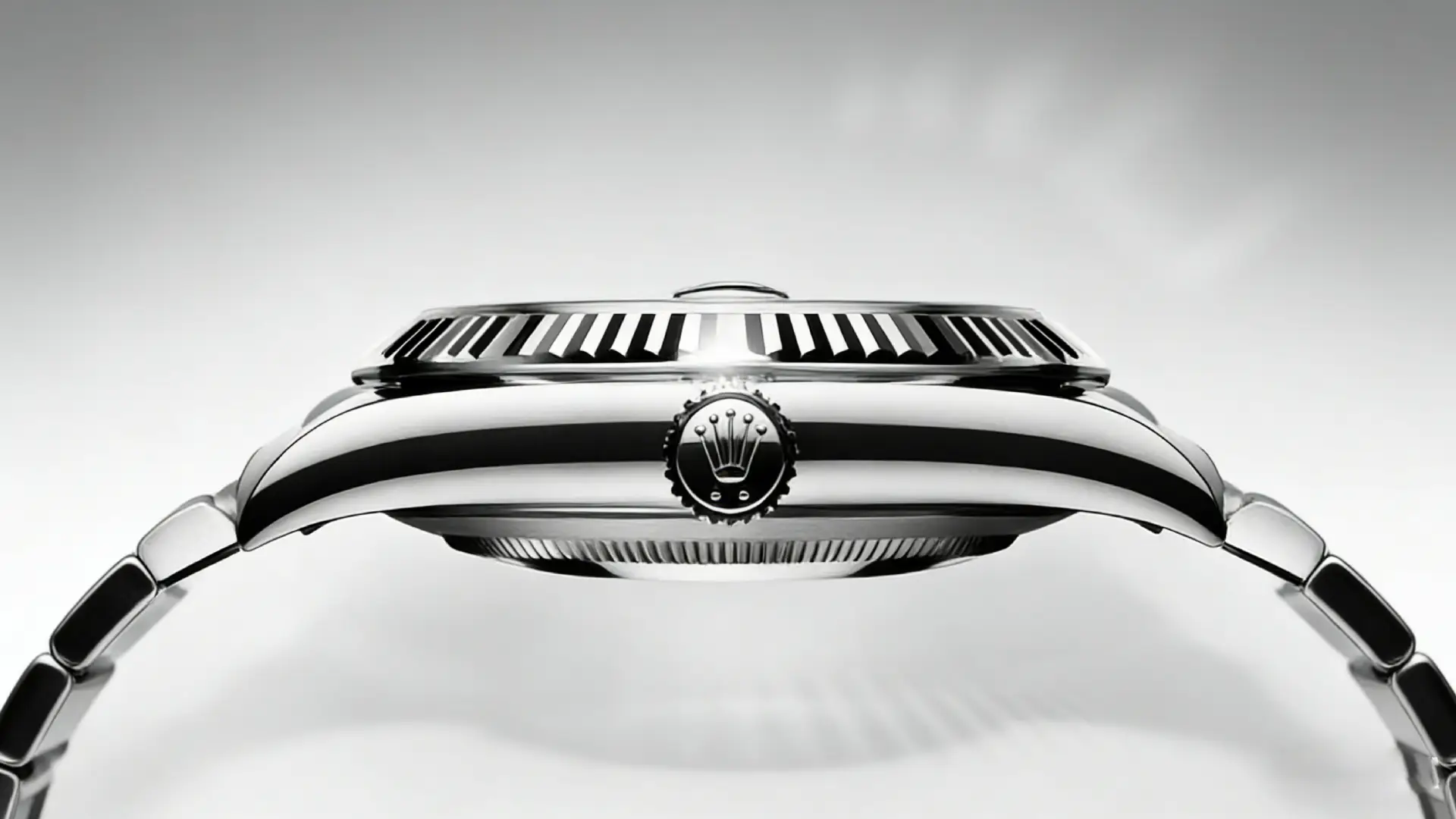
The Rolex Oyster Case is one of the most significant inventions in watchmaking history. Introduced in 1926, it became the world’s first truly waterproof wristwatch case and shaped the future of sports watches as we know them. Today, the rolex oyster case remains a core feature across most Rolex collections, defining their durability, reliability, and timeless design.
Whether you’re a collector, a first-time buyer, or simply curious about how Rolex builds its watches, this guide will walk you through everything you need to know about the Oyster Case—its structure, history, materials, and why it still matters in 2025.
What Is the Rolex Oyster Case?
The Rolex Oyster Case is a patented, hermetically sealed watch case designed to protect the movement from water, dust, pressure, and shock. The patent was filed by Hans Wilsdorf, the founder of Rolex, who envisioned a wristwatch that could remain perfectly sealed under harsh conditions. When it launched in 1926, it revolutionized the watchmaking world by providing reliable waterproofness at a time when most watches were fragile and prone to moisture damage.
It was called “Oyster” because the case seals shut like an oyster shell—tight, protective, and nearly impossible for water to enter. This durable construction makes Rolex watches suitable for everyday wear and even extreme environments.
How the Rolex Oyster Case Works
The Oyster Case is built with multiple interlocking components that create a secure, waterproof seal.
1. Monobloc Middle Case
The middle case is carved from a solid block of metal (Oystersteel, gold, or platinum). Offers exceptional rigidity Provides a strong foundation for the bezel, caseback, and movement Reduces points of entry for water This “monobloc” structure is one of Rolex’s engineering signatures.
2. Screw-Down Crown
One of the most essential elements of the rolex oyster case is the screw-down crown. Rolex uses two systems: Twinlock (100m water resistance) Triplock (300m+ water resistance) When screwed down, gaskets compress tightly to block water from entering through the winding stem—a common weak point in watches without a screw-down crown.
3. Screw-Down Caseback
The caseback screws directly into the middle case using a system of fine grooves unique to Rolex. Reinforces waterproof sealing Helps withstand high pressure under water Requires special Rolex tools to open This ensures only trained watchmakers can access the movement.
4. Pressure Testing
Every watch with an Oyster Case undergoes rigorous pressure testing at Rolex facilities. Tests exceed standard advertised water resistance Ensures real-world durability Aligns with or surpasses ISO standards This testing guarantees that modern Oyster-cased watches are ready for everyday wear or even professional diving.
Materials Used in the Rolex Oyster Case
Rolex invests heavily in materials that enhance strength, corrosion resistance, and long-term durability.
Oystersteel (904L steel)
A high-performance, anti-corrosion alloy often used in aerospace and chemical industries.
18k Gold
Yellow, white, or Everose (Rolex’s proprietary rose gold).
Platinum
Used for premium references due to its weight and luster.
Rolesor
Combination of stainless steel and gold—both functional and luxurious.
Cerachrom Bezel Inserts
Scratch-resistant ceramic that maintains color over time.
The Evolution of the Rolex Oyster Case
1926 – The First Oyster
The world’s first waterproof wristwatch case.
1953 – Submariner era
Improved crown guards and deeper water resistance.
1960–1980 – Professional expansion
Sea-Dweller, Explorer, and Milgauss benefited from enhanced durability.
2000s – Modern engineering
Better machining, stronger alloys, and scratch-resistant materials.
Today
The Oyster Case remains central to Rolex’s identity, combining heritage with modern performance standards.
Why the Rolex Oyster Case Is Unique
Industry-leading waterproof performance Durable materials built for extreme environments Precision engineering refined over nearly a century Elegant balance of function and aesthetics Strong resale value due to brand legacy Few watch cases combine performance and luxury as well as the rolex oyster case.
Which Rolex Models Use the Oyster Case?
Most modern Rolex watches feature the Oyster Case, including: Rolex Submariner Rolex Sea-Dweller & Deepsea Rolex Datejust Rolex Day-Date Rolex Daytona Rolex Oyster Perpetual Rolex GMT-Master II Rolex Explorer The only Rolex collection without the Oyster Case is Cellini, which uses a more traditional dress-watch case.
How to Maintain a Rolex Oyster Case
To ensure long-term waterproofness:
1. Always screw down the crown
Leaving the crown unscrewed is the easiest way for water to enter.
2. Clean regularly
Rinse with fresh water after seawater exposure.
3. Avoid unnecessary impacts
Although strong, the case is not indestructible.
4. Test water resistance periodically
Rolex recommends checking every 5 years or after any significant impact.
Conclusion
The Rolex Oyster Case is much more than a waterproof shell—it is the foundation of Rolex engineering, durability, and prestige. Its nearly 100-year history, combined with modern innovations, makes it one of the most reliable and iconic case structures ever created. Understanding how the rolex oyster case works helps explain why Rolex watches remain industry leaders in performance and longevity.
Whether you’re looking for a daily-wear piece or a professional tool watch, the Oyster Case plays a key role in what makes a Rolex truly exceptional.
FAQ
1. What is the Rolex Oyster Case?
A patented waterproof and dust-proof case designed to protect the movement and ensure long-term durability.
2. How waterproof is the Rolex Oyster Case?
Depending on the model, it ranges from 100m to over 1,220m (Deepsea).
3. Do all Rolex watches use the Oyster Case?
Most do, except the Rolex Cellini collection.
4. What is the difference between Oyster Case and Oyster Perpetual?
The Oyster Case refers to the waterproof case; Oyster Perpetual refers to a Rolex collection and self-winding movement.
5. Why is the Oyster Case important?
It set the industry standard for waterproof watches and remains a cornerstone of Rolex engineering.